


Two pool service products are actually free to use today: Pool Service Software (PSS) is free up to 10 properties with every feature, and The Dip App’s core is free and earns from payment fees. Everything else, PoolDial included, is paid after a trial. What matters is what each costs once you grow past free, and what you pay in fees along the way.
I’m Parker Conley, the founder of PoolDial, so read this as a vendor’s guide rather than an independent ranking. PoolDial is not free, and I’ve ranked the products by situation and explained each one’s tradeoffs. My own picks are labeled as opinion below.
If money is tight, I’d look at Pool Service Software or The Dip App. PSS is free up to 10 properties with every feature, and The Dip App’s core is free and paid for through payment fees.
PoolDial isn’t free. It’s $2 per pool with a $40 monthly minimum, after a 14-day trial. For a solo operator or someone just starting out who can pay a little, I’d look at PoolDial or Skimmer. Free is hard to beat on day one, so price the business you expect to have next year, not only this month.
Quick picks
| Situation | Look at | Why |
|---|---|---|
| Up to 10 pools, want every feature | Pool Service Software (PSS) | Free through 10 properties, where a property is a body of water |
| No monthly software bill | The Dip App | Free core features; fees on card and ACH payments |
| Lowest paid bill as you add techs | Paythepoolman | $50 a month plus $15 per technician, checked August 12, 2026 |
| Solo or starting out, can pay a little | PoolDial or Skimmer | PoolDial: $40 monthly minimum and a 14-day trial; Skimmer: $49 a month up to 49 serviced locations |
| 3 or more technicians | Skimmer or Pool Brain | Neither is free; Pool Brain starts at $50 a month plus $65 per technician |
What each tool includes
This is what each product offers for free, and what it costs after that, from our reviews. Prices are published list prices on the dates shown, not quotes.
| Software | What is free | What it costs after |
|---|---|---|
| Pool Service Software (PSS)Checked Aug 12, 2026 | Every feature, up to 10 properties | $49.99/mo through 50, $99 through 100, then $0.95 per property |
| The Dip AppListed May 2026 | Core features, with no per-user or per-pool fees | Card 3% + $2; ACH $3.50; Smart Routes listed at $24.99/mo |
| PoolDial | A 14-day trial; no free plan | $2 per pool, $40/mo minimum, unlimited users |
| SkimmerChecked Oct 29, 2026 | A first-month Scaling Up promotion with usage limits | $49/mo up to 49 locations, then $2 per location |
| PaythepoolmanChecked Aug 12, 2026 | No free plan in our sources | $50/mo plus $15 per technician |
| Pool BrainChecked Oct 29, 2026 | No free plan in our sources | $50/mo plus $65 per technician |
| Spreadsheets and a calendar | Everything, if you build it yourself | Your time; no field app, routing, or connected billing |
What to test
Free software is only cheap if it still fits after you grow. Before you commit:
- Count your properties the way each vendor counts them. PSS counts each body of water.
- Price the route you expect a year from now, not only the one you have today.
- Estimate a month of customer payments at The Dip App’s card and ACH fees.
- Export a sample of your customers and service history before you put a season of data in.
- Read the trial or promotion terms, including what gets billed when it ends.
The options
1. Pool Service Software (PSS)

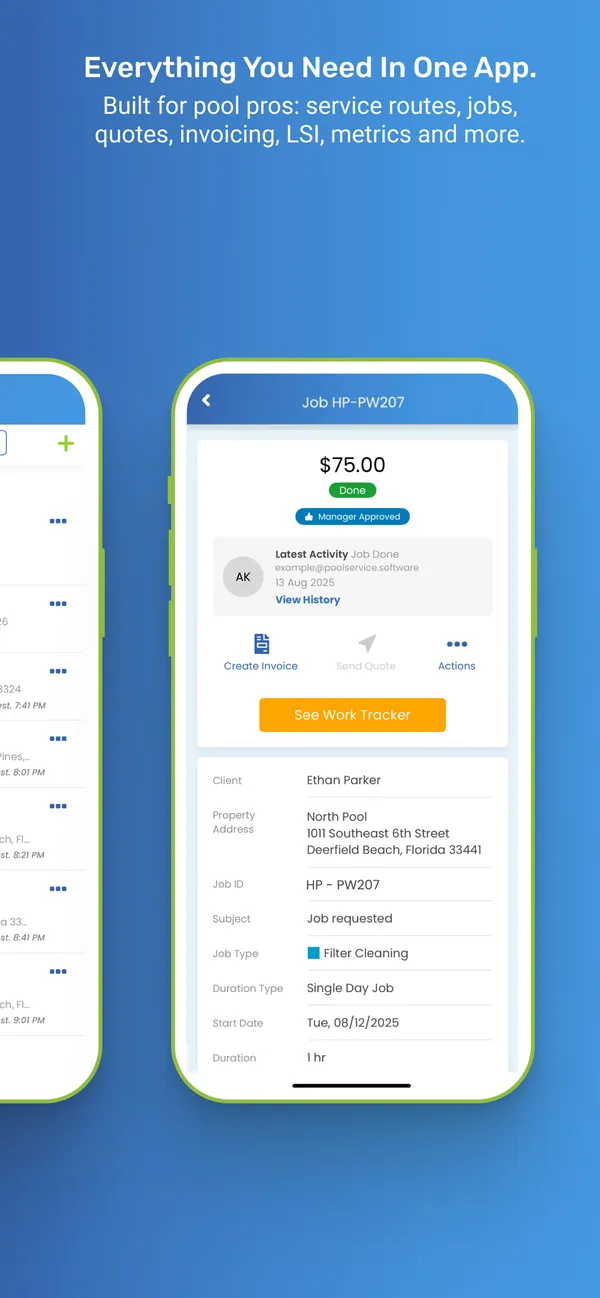
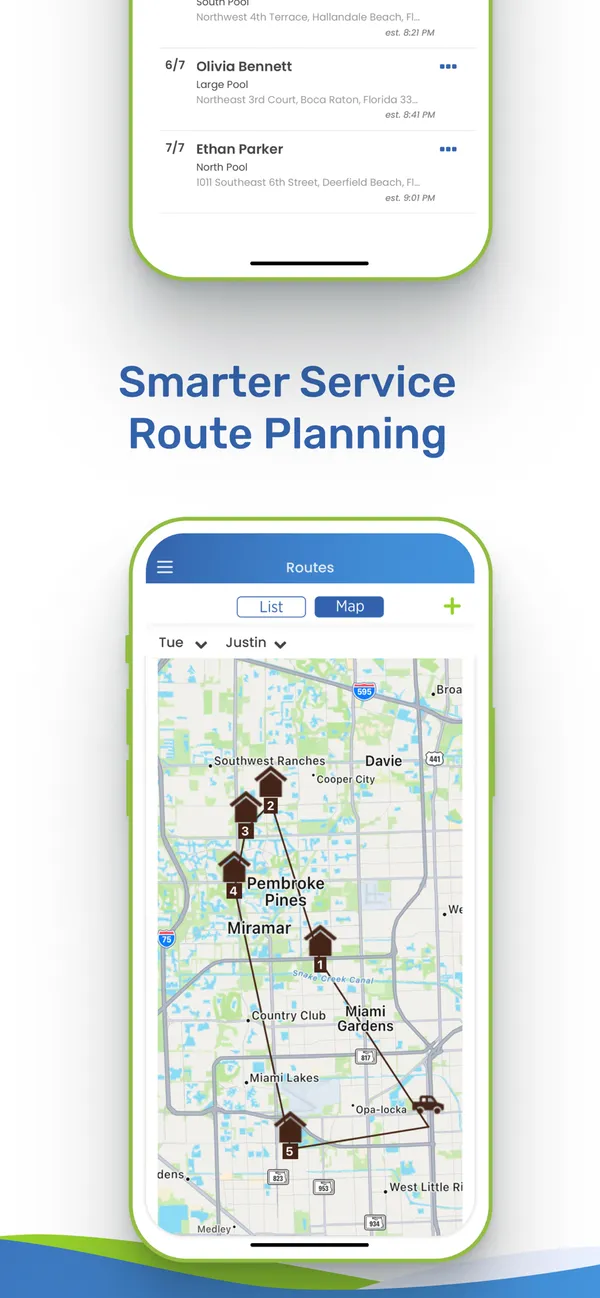
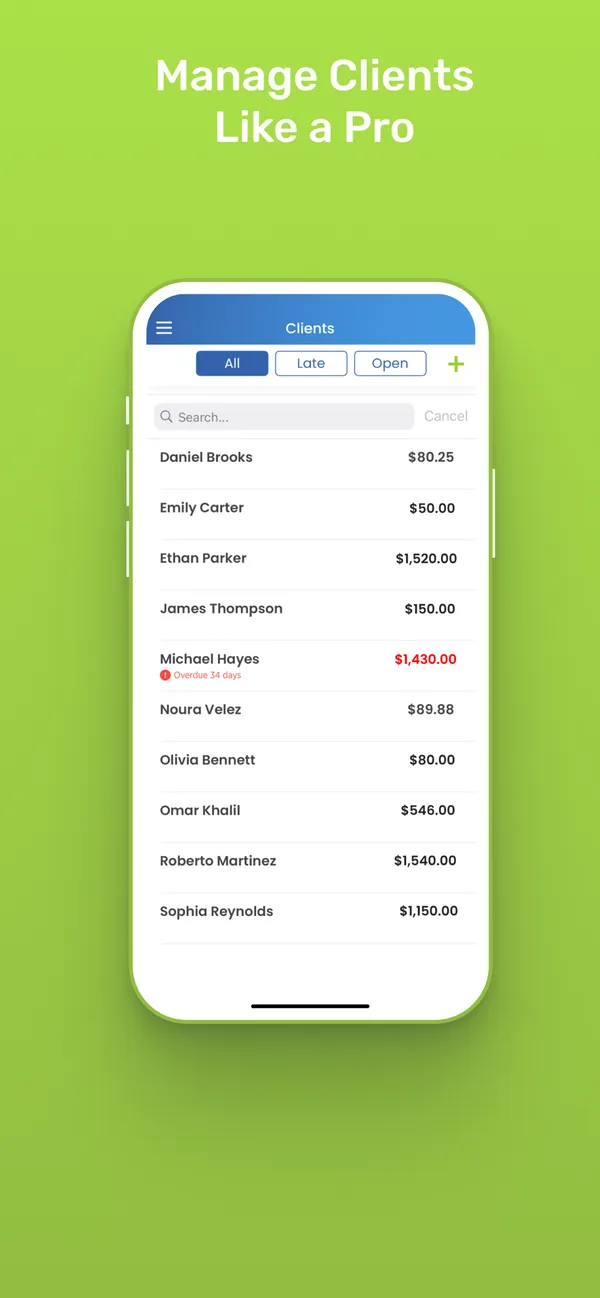
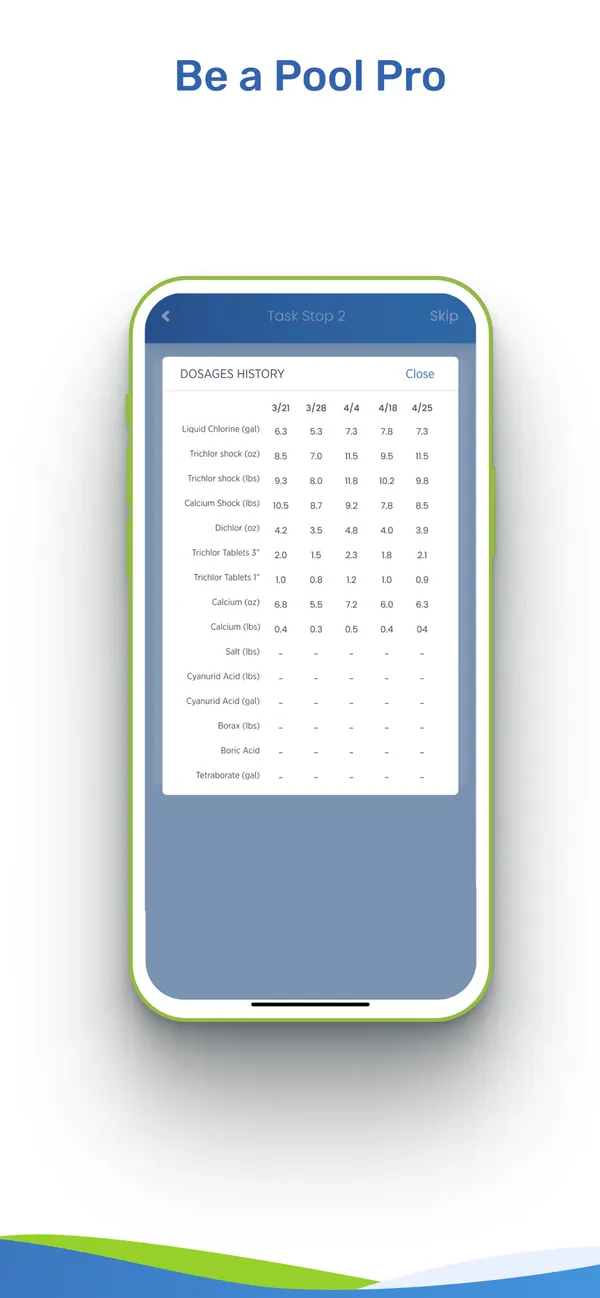
Pool Service Software ranks first because it is the most complete free offer here. Every feature is free through 10 properties, including readings, dosages, LSI, GPS, invoicing, and offline field work. Nothing in our sources says you give up features to stay free. The limit is size, and a property is a body of water, so a pool and a spa may count as two. Confirm how yours would count.
After that it is $49.99 a month through 50 properties, $99 through 100, then $0.95 per property, before a 15% annual discount, checked August 12, 2026. So 150 properties come to about $142.50 and 300 to about $285. That still costs less than PoolDial at every size in our estimates.
The cost to watch is leaving. I didn’t find clear public documentation for a complete outbound export, so check what comes with you before you put a season of data in.
2. The Dip App

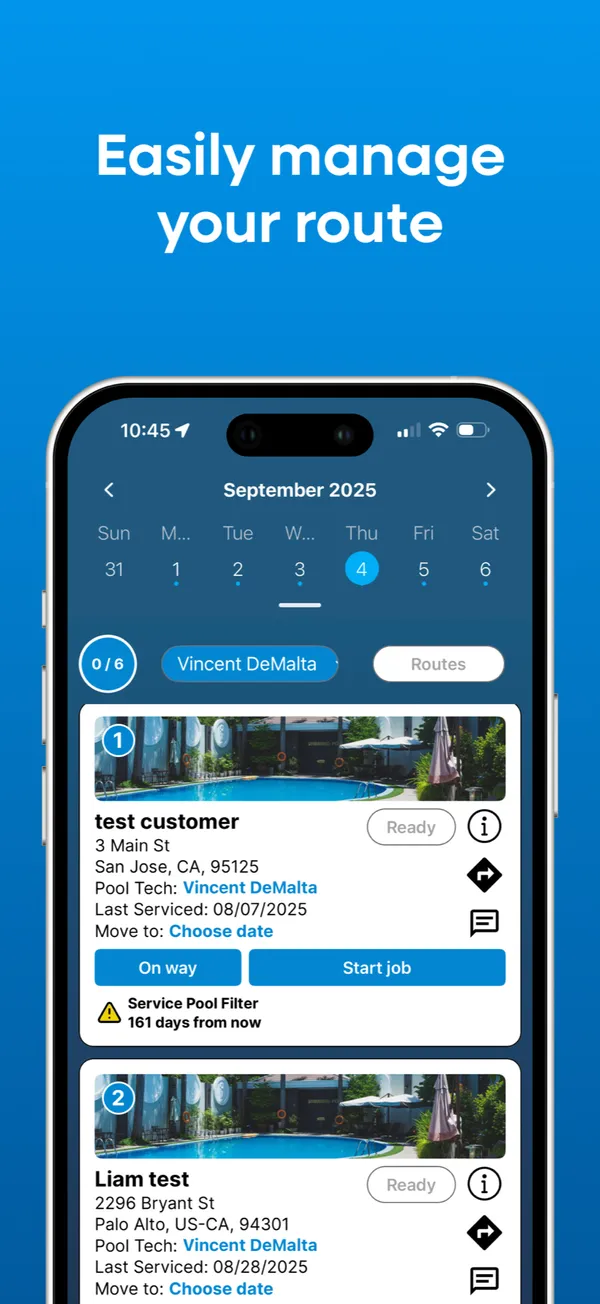
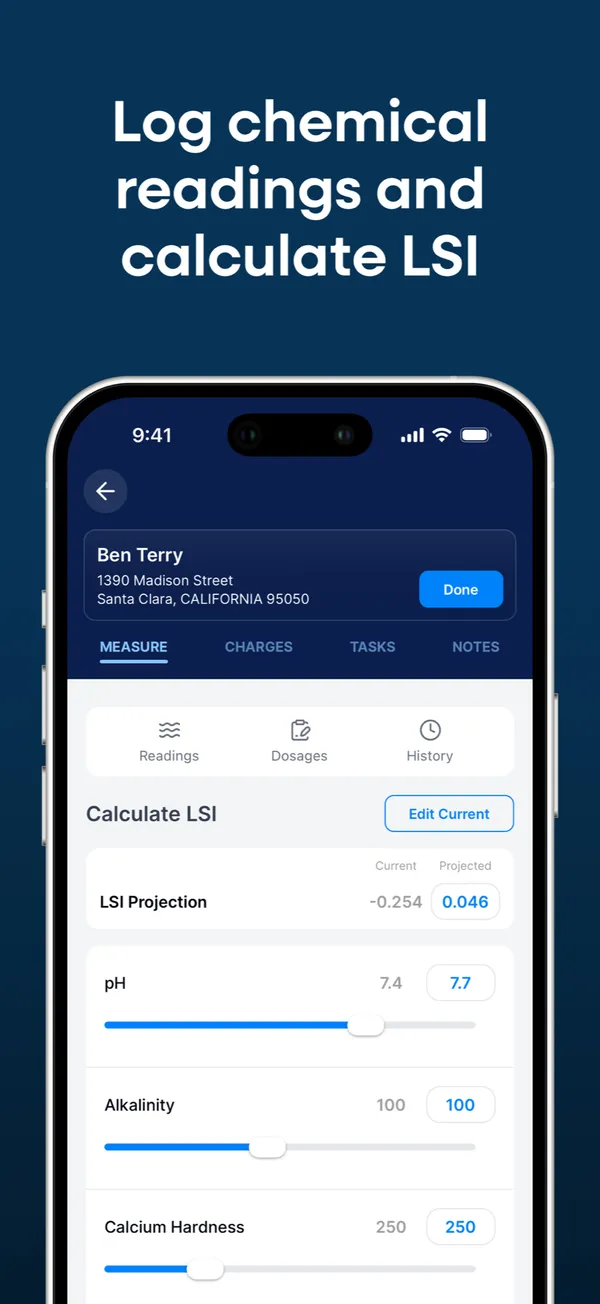
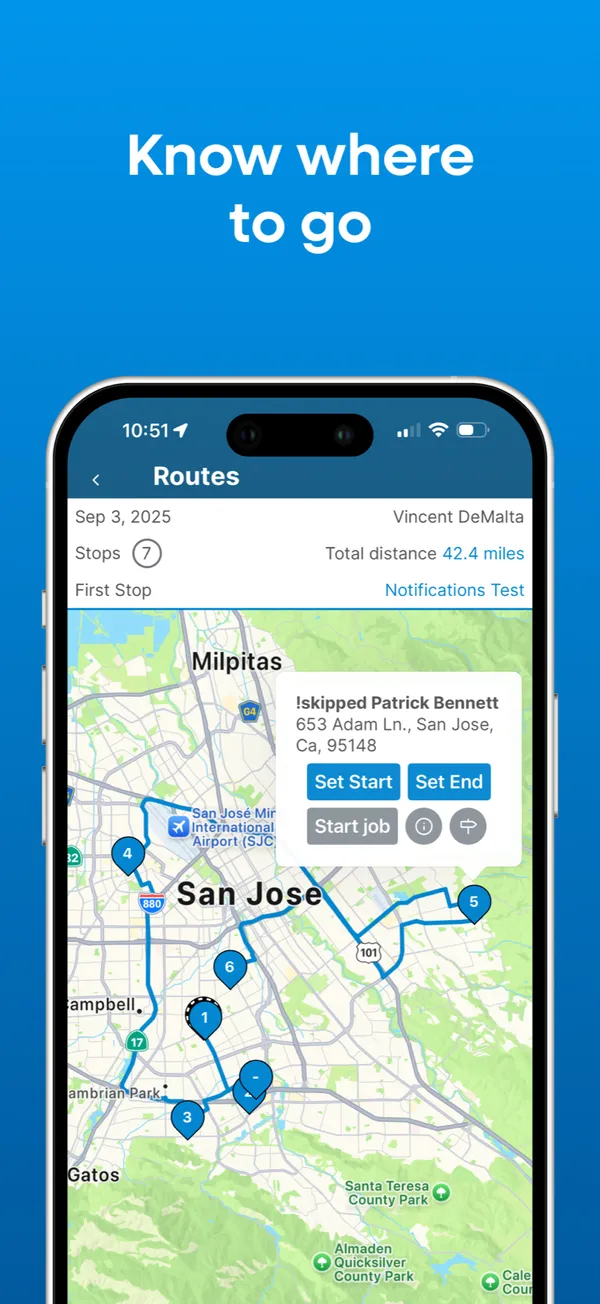
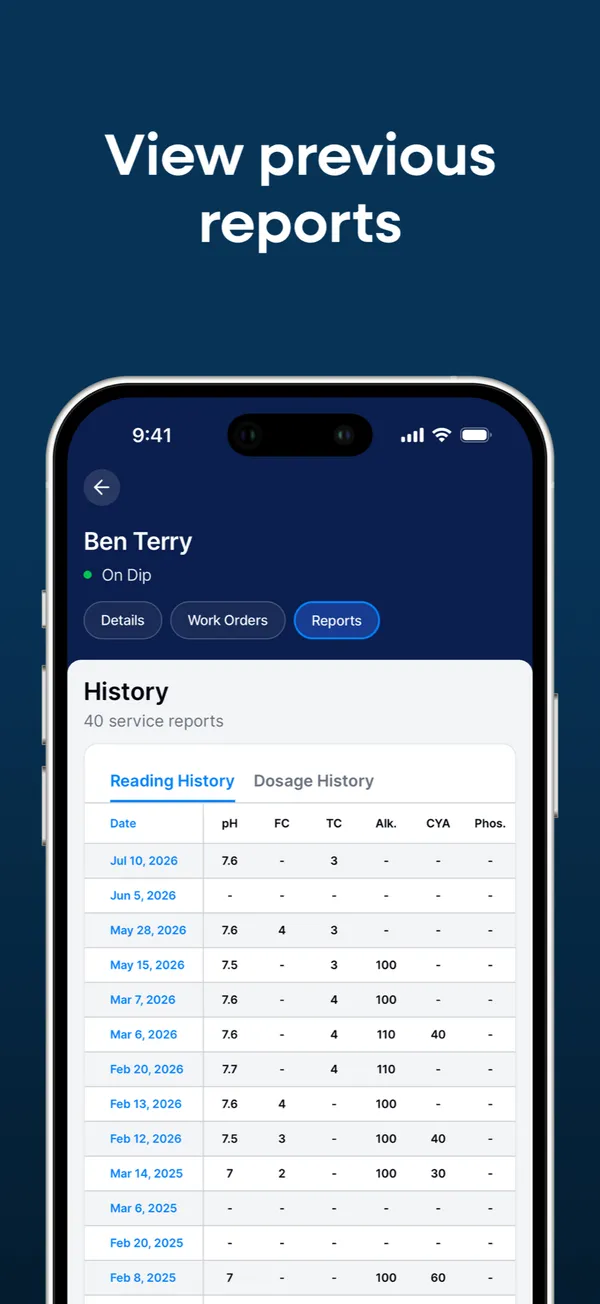
The Dip App ranks second because you pay nothing for the software itself, whatever your size. Its core covers customers, scheduling, readings with LSI, invoicing, and payments, with no per-user or per-pool fees. That is hard to beat for a solo operator starting out.
It earns from payments instead. As listed in May and August 2026, card payments cost 3% + $2 and ACH transfers cost $3.50, so a $100 invoice leaves $95 by card or $96.50 by ACH. On a $200 invoice, the card fee works out to $8. Estimate a month of your payments, since those fees can outweigh a flat software bill as you grow. Smart Routes was listed at $24.99 a month in May 2026, so confirm whether it still costs extra.
Growing has other costs. Technician assignment is basic, without role-based permissions, customer-facing history covers 12 months, and it didn’t list phone answering when we last checked.
3. Paythepoolman

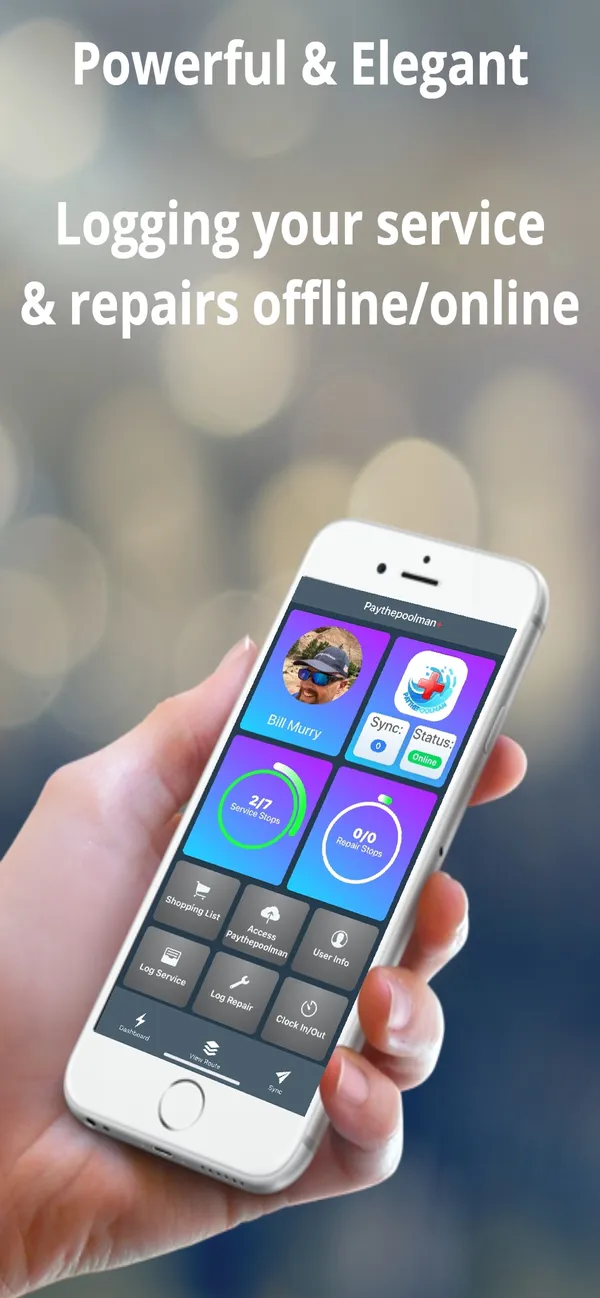
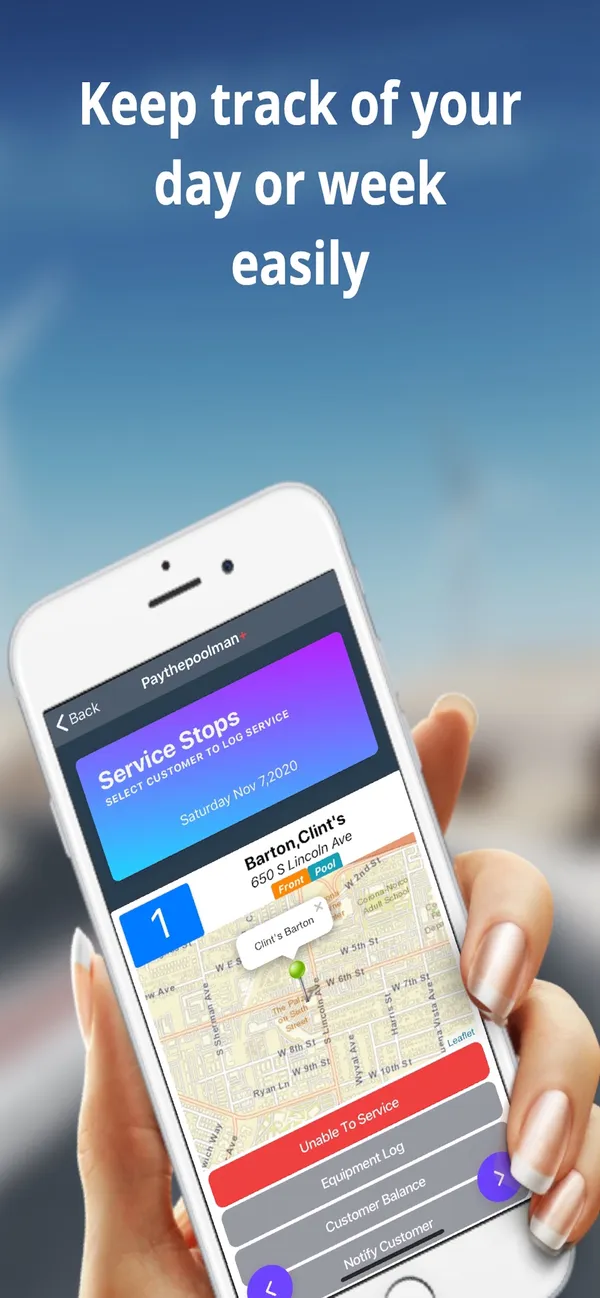
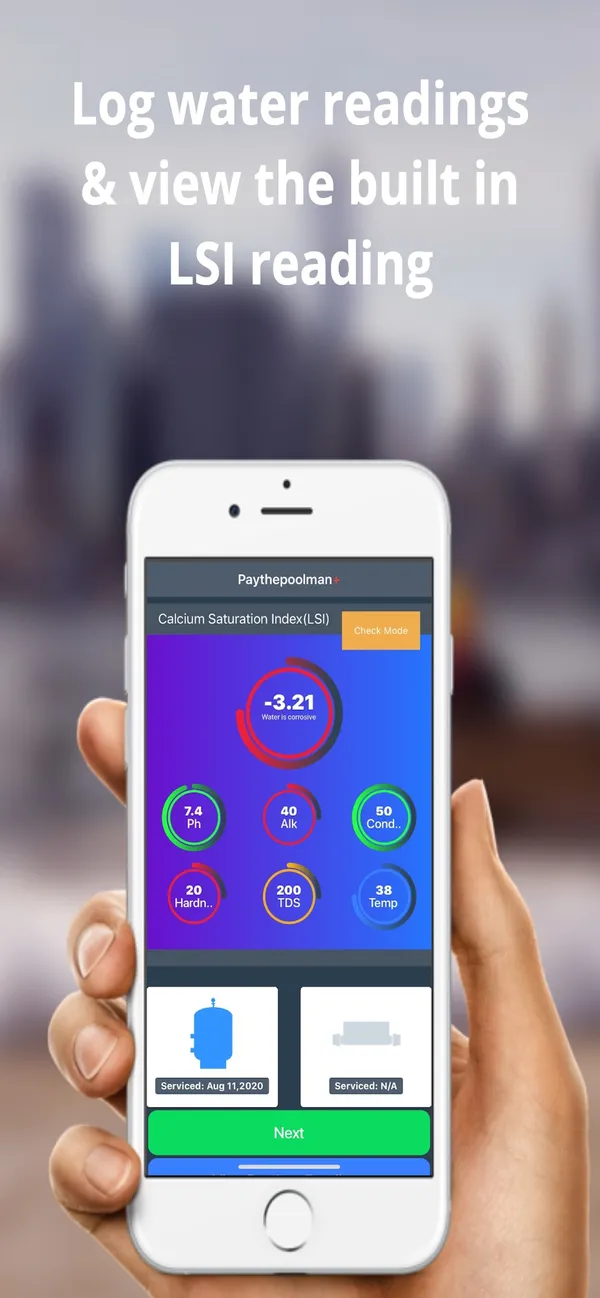
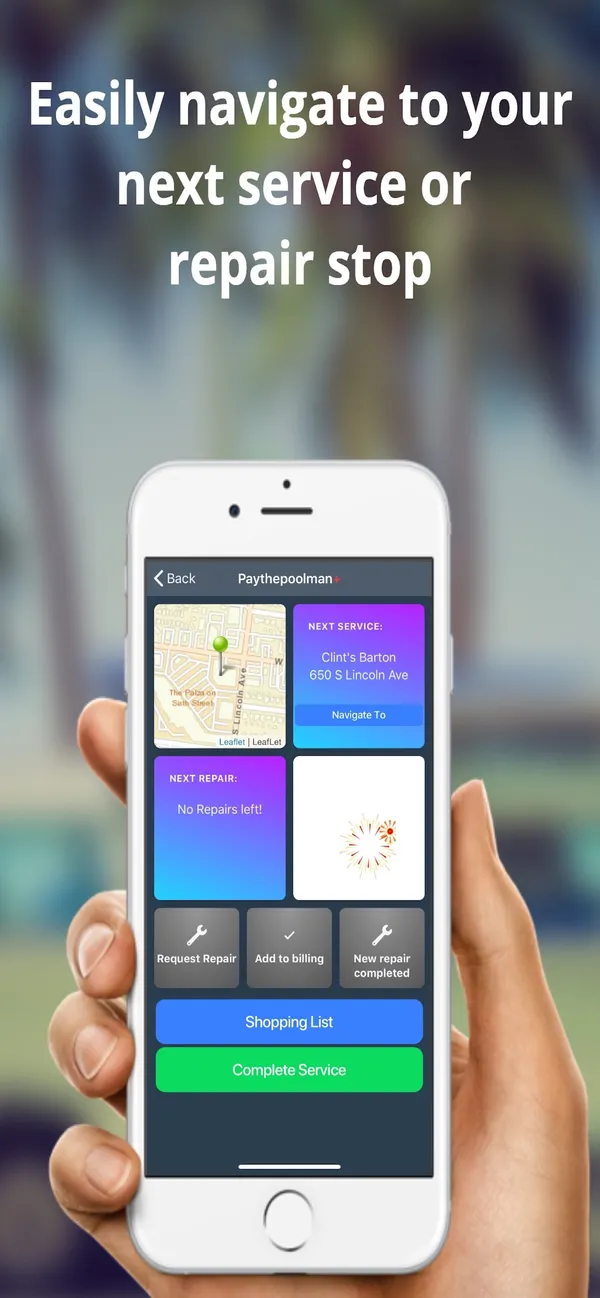
Paythepoolman isn’t free, and our sources show no free plan. It ranks third because it may be the next best thing: the lowest paid bill in this guide once you add technicians. The price is $50 a month plus $15 per technician, checked August 12, 2026. One technician comes to about $65, three to about $95, five to about $125, and 15 to about $275.
Because it charges by technician rather than by pool, the bill stays low as a route adds pools. A three-tech, 150-pool company would pay about $95 against about $300 on PoolDial, so PoolDial loses this comparison at every size in our estimates.
What it costs later depends on your package. Those figures exclude add-ons and custom-priced services, and some features are add-ons, new, or beta, including its QuickBooks Online integration. Get a written list of what your price covers, and run a real route in a demo before you sign up.
4. PoolDial
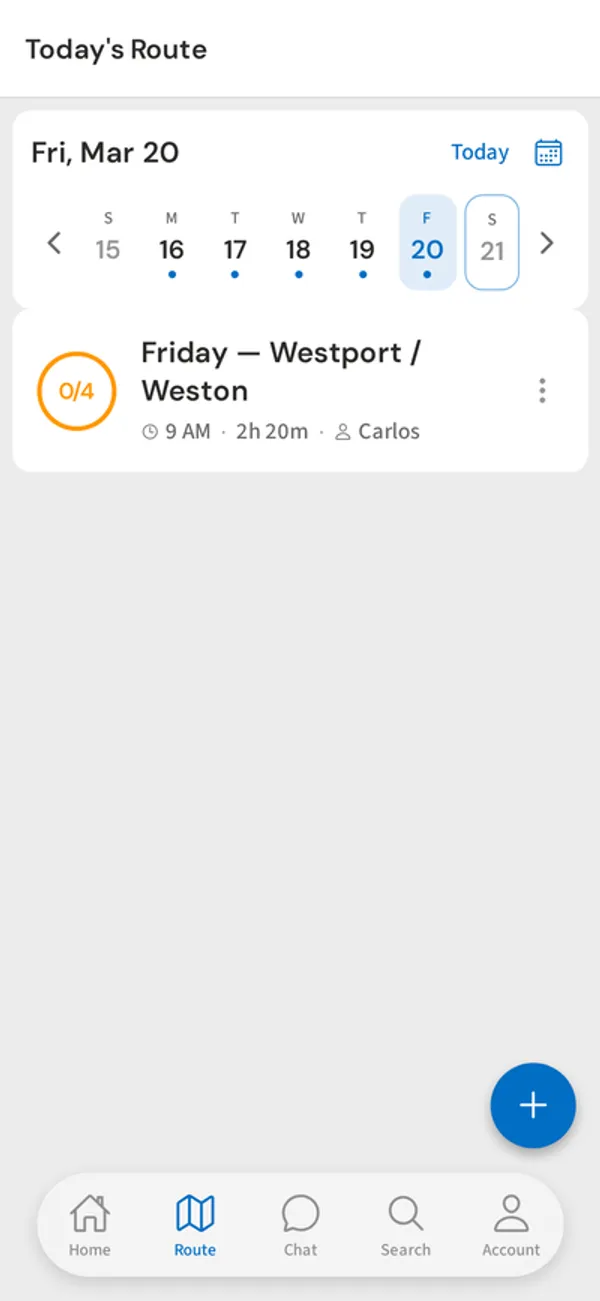
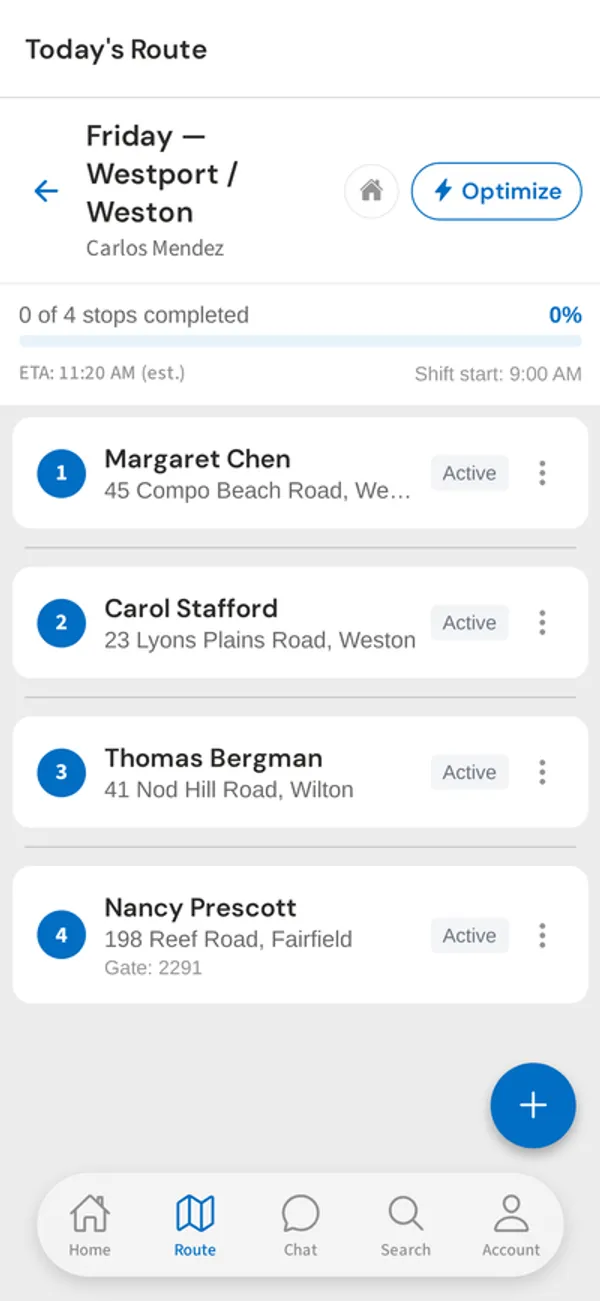
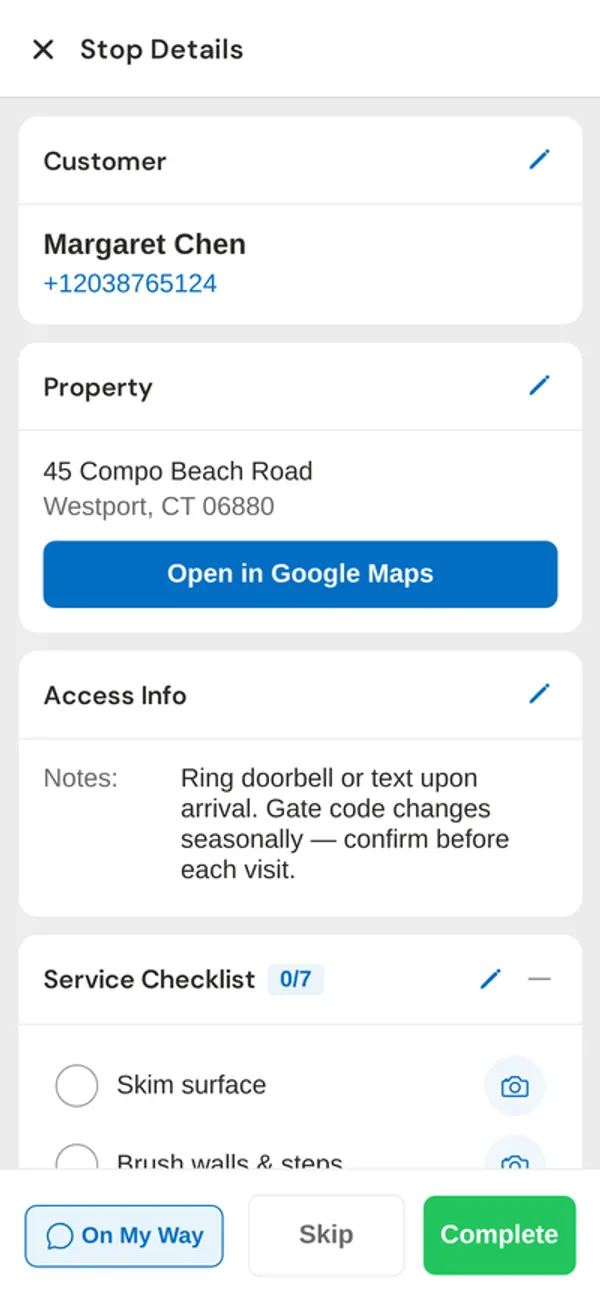
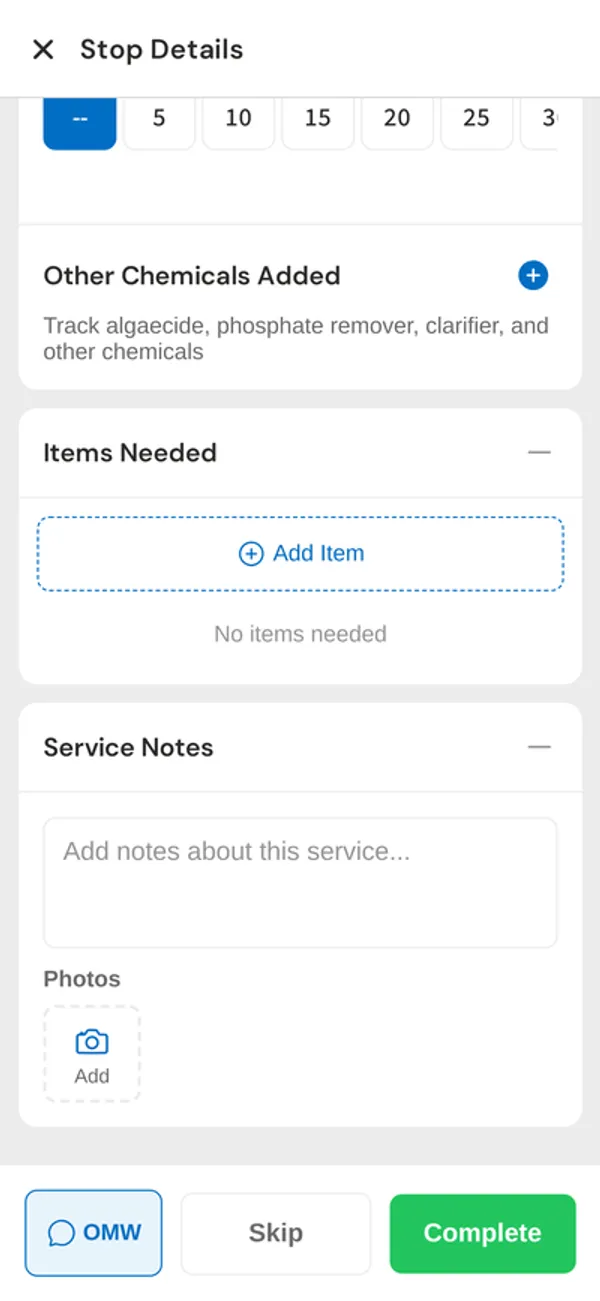
PoolDial isn’t free. It costs $2 per pool per month with a $40 monthly minimum, after a 14-day trial. That comes to about $100 a month at 50 pools, $200 at 100, and $300 at 150. It ranks fourth here because this page is about cost, and three products above it cost less at most sizes.
The Dip App has no software fee, and PSS and Paythepoolman cost less at every size in our estimates. If your main goal is the lowest bill, start with one of those.
What the higher price buys is unlimited users, phone answering, a customer portal, team roles, and every feature on one plan, with no contracts. It fits owners growing from their first customer toward their first crew, generally up to roughly 200 pools and a few employees. It is also a newer product with little public review history. Card and ACH processing runs through Stripe, so compare those costs too.
5. Skimmer

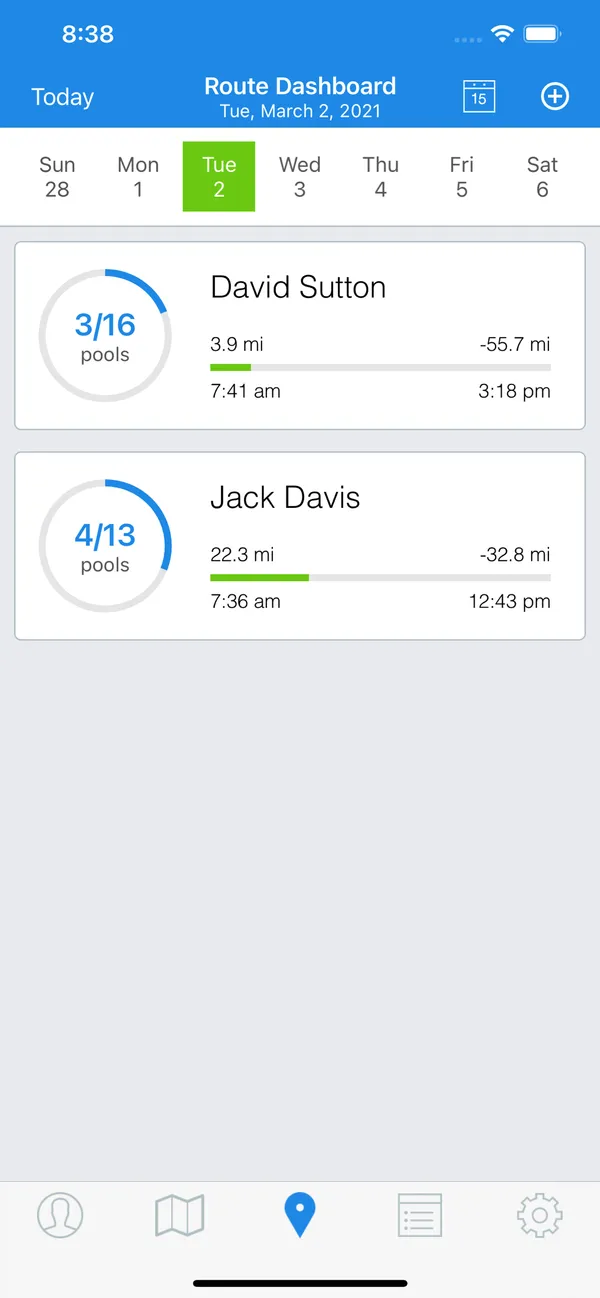
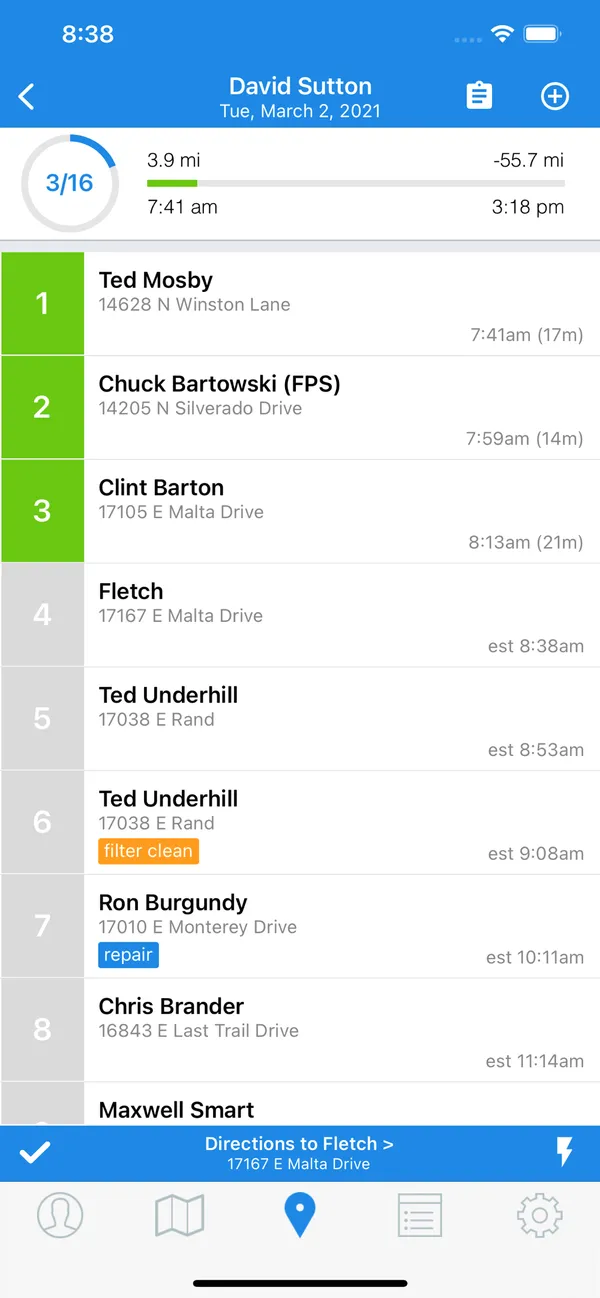
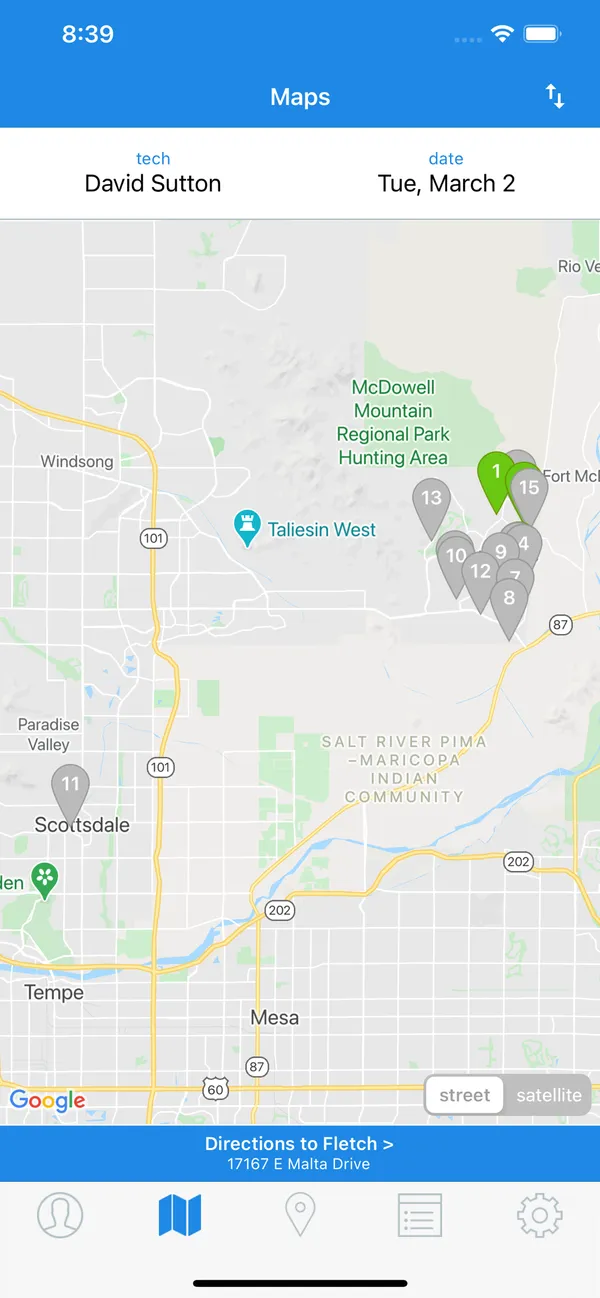
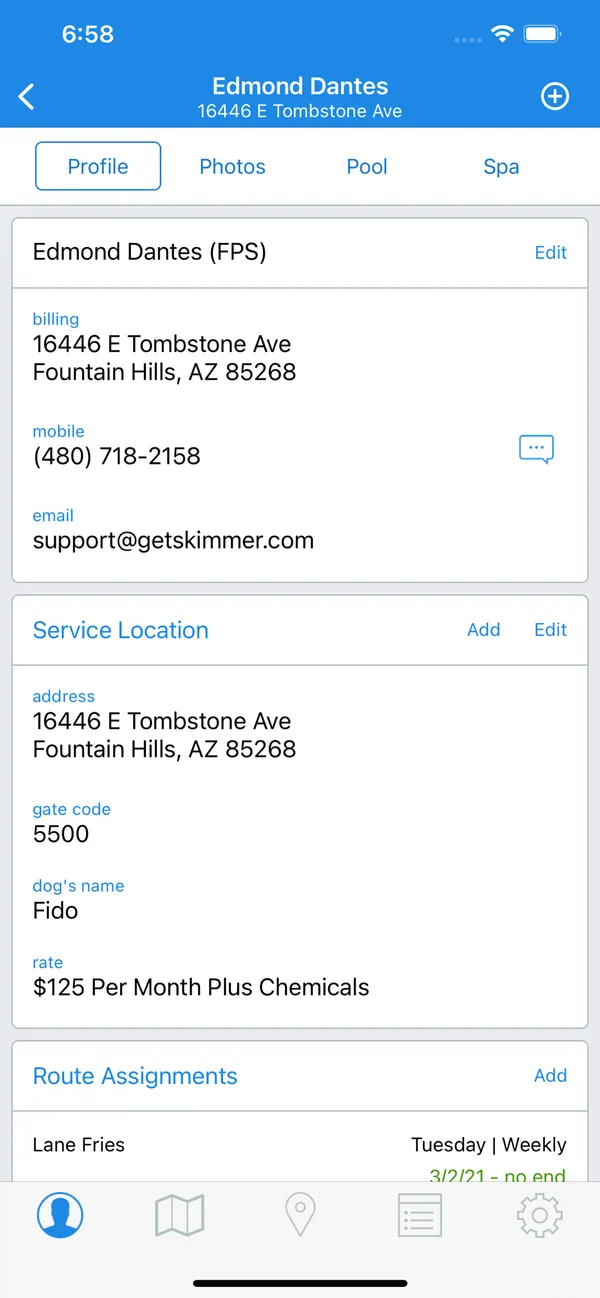
Skimmer isn’t free either. It ranks fifth because it has a low entry price, though the plan you start on may not be the plan you stay on. Getting Started is $49 a month for up to 49 serviced locations, checked October 29, 2026. It advertises a first-month Scaling Up promotion with usage limits, and its terms say service beyond 49 locations can be billed. Read those terms before you start.
Costs change as you grow. Scaling Up is $2 per location from 50 to 1,000 locations, so 50 come to about $100 a month and 300 to about $600. That matches PoolDial’s published formula at those sizes. Route optimization comes with Scaling Up, not Getting Started.
AI Phone is an optional $99 monthly add-on, so a 100-location account with it comes to about $299. In return, you get a long operating history and a large public review record, which may be worth more to you than saving a little.
6. Pool Brain

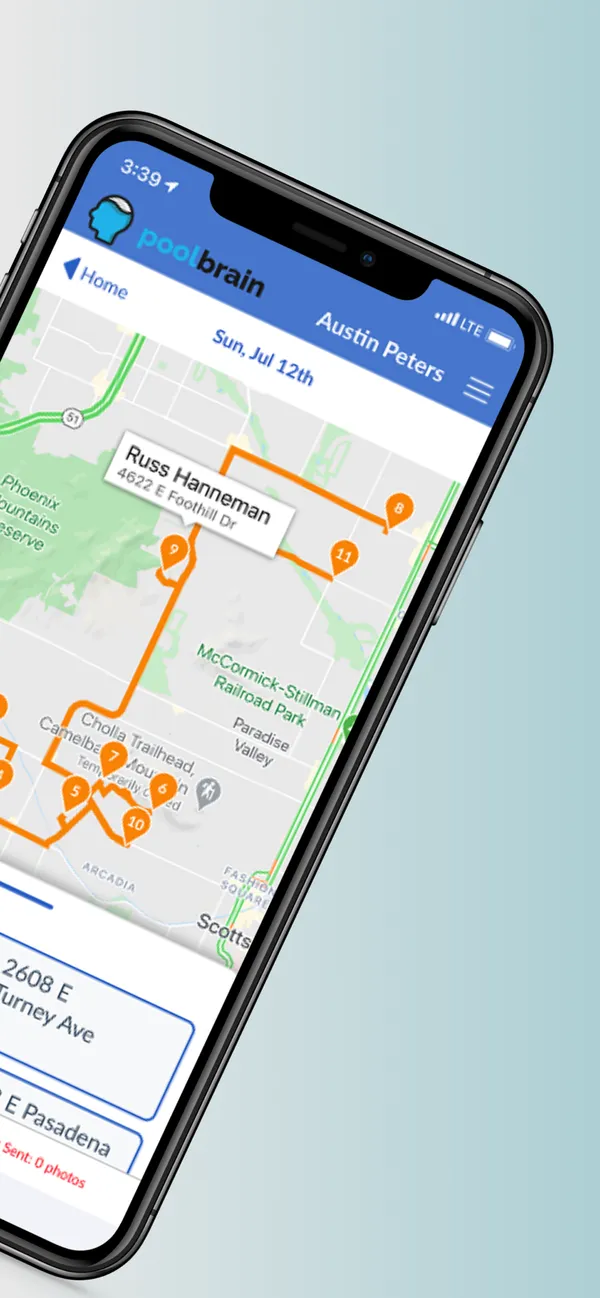
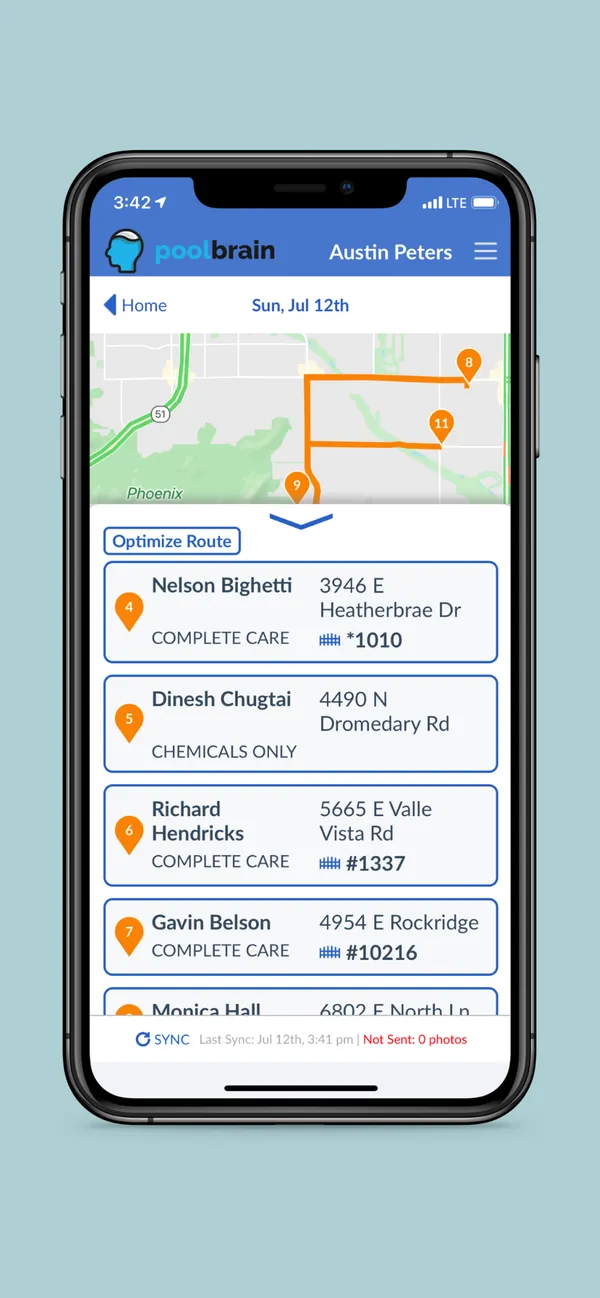
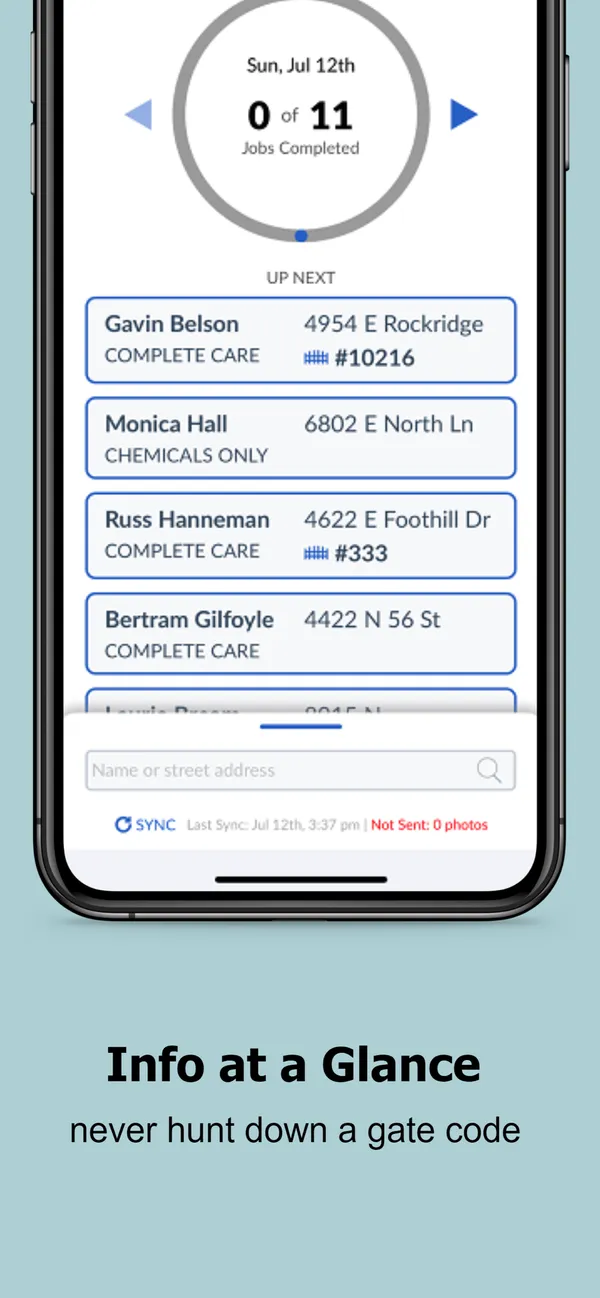
Pool Brain isn’t free, and our sources show no free plan or trial, so ask what it offers. It ranks sixth on this page because its starting bill for a working route is the highest of the paid options listed here. The price is $50 a month plus $65 per active field technician, checked October 29, 2026, so a solo route comes to about $115.
Costs later are easy to predict. Three technicians come to about $245, five to about $375, and 15 to about $1,025, with unlimited office users. That formula came out lower than PoolDial’s from three technicians upward in our estimates, so it may suit a team that plans to add technicians.
What you pay for is control: service levels with required readings and checklists, plus route optimization. It isn’t a budget starting point for one person, but it deserves a look if you are already past the solo stage. Price the team you expect to have.
7. Spreadsheets and a calendar
Spreadsheets and a calendar are truly free, and you may already know how to use them. For a few customers, they can be enough. You can list addresses, keep a service schedule, write down readings, and send invoices from a separate tool or by hand. You also keep full control of the file, with nothing to cancel and no vendor to depend on.
The cost shows up in your time. You build and maintain everything yourself. There is no field app for readings, no route optimization, and invoices sit apart from service history, so answering a customer’s question can mean checking several places. Mistakes are easy to miss, and records can fall behind when you are busy.
This option makes sense while your route is small and you are testing the business. Once you are spending real time on records or adding a helper, compare what that time costs with the free and low-cost software above.
Frequently Asked Questions
Is there free pool service software?
Yes. Pool Service Software is free up to 10 properties with every feature, where a property is a body of water. The Dip App’s core features are free, and it charges fees on card and ACH payments. Check what each costs once you grow past the free level.
Is PoolDial free?
No. PoolDial offers a 14-day trial, then charges $2 per pool per month with a $40 monthly minimum. Unlimited users and phone answering are included.
What does Pool Service Software cost after 10 properties?
As checked August 12, 2026, PSS charges $49.99 a month through 50 properties, $99 through 100, then $0.95 per property, before its 15% annual discount. A property is a body of water, so count yours before estimating.
If The Dip App is free, how does it make money?
From payment processing. As listed in May and August 2026, card payments cost 3% + $2 and ACH transfers cost $3.50, so a $100 invoice leaves $95 by card or $96.50 by ACH. Smart Routes was listed at $24.99 a month in May 2026, so confirm current pricing with Dip.
Is this guide independent?
No. PoolDial publishes it, and I founded PoolDial. That’s why each product comes with its tradeoffs, competitors rank above PoolDial where they fit better, and prices carry the date they were checked.
If a free plan is working for you, staying with it can be the right decision. For the full picture, see the pool service software guide, or the guides to route optimization software, the best mobile app for pool technicians, and chemical tracking software.